In-The-Box vs Analog
Plugins are amazing. Let’s just get that out of the way.
You can mix a full record on a laptop in a café — and it’ll sound good.
You’ve got EQs, compressors, tape saturation, reverbs, surgical tools, vintage gear emulations — all right there in your DAW.
And then there’s the “next level”:
DSP-based plugins like Universal Audio, Antelope Audio, Waves SoundGrid, Slate Digital VMS, TC Electronic, Avid HDX, and others.
They emulate vintage analog units using their own chips, freeing up your CPU and delivering near-zero latency.
Great stuff.
But here’s the thing. None of that sounds — or feels — like the real deal.
Let’s talk real analog hardware.
We’re talking:
- Pultec EQP-1A – ~$4,000
- Neve 1073 preamp – ~$3,500
- Teletronix LA-2A – ~$4,500
- API 2500 stereo bus comp – ~$3,000
- Studer A800 tape machine – don’t even ask
- EMT 140 plate reverb – costs more to ship than to buy
And that’s just the classics.
Modern analog gear from brands like Heritage Audio, Chandler Limited, Manley, Dangerous Music, Bettermaker, Tree Audio, Thermionic Culture — also isn’t cheap.
You don’t buy them because it’s “easy”. You buy them because it matters.
What analog does:
- Adds depth without trying
- Introduces subtle imperfections that feel musical
- Responds to signal in a physical, not simulated, way
- Forces you to commit — you can’t “undo” a knob on a real LA-2A
Yes, analog is slow.
Yes, routing is annoying.
Yes, everything needs cables, levels, grounding, temperature control.
Yes, recall is a nightmare.
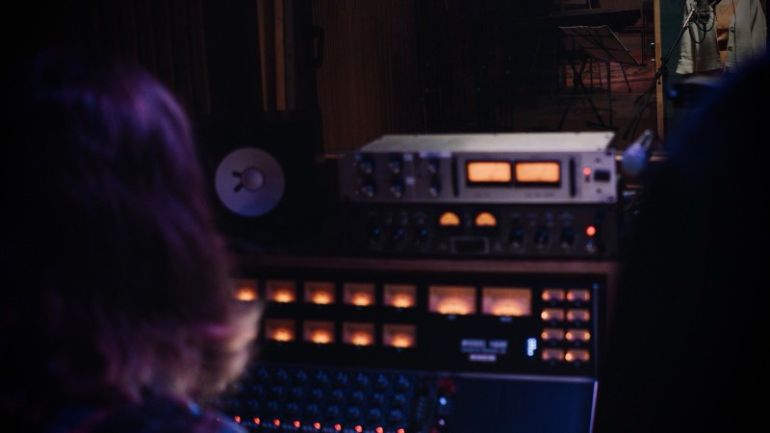
But when you run a vocal through a vintage Neve pre, you feel it.
When a kick hits a real 1176, it doesn’t just compress — it moves air.
We’ve been there. We still are.
At Digital Coma, we’re not anti-digital. We use plugins every day. But we believe in analog — not out of nostalgia, but out of obsession.
Our first studio didn’t have any analog “noise”. It had high-end analog gear — meticulously wired, gain-staged, and monitored.
The result?
Analog warmth, depth, and texture — with pristine signal quality. That’s the sweet spot.
So what should you use?
Both. Use what inspires you. Use plugins when speed matters. Use hardware when depth matters. Get your ideas down fast — then print them slow.
Not every track needs a $3,000 compressor. But if you’ve ever heard one — you know.
We’re not here to argue about 1s and 0s. We’re here because we love the long road. The harder path. The one with transformers and tubes and no undo button.
And yeah — it takes patience.
But the results?
Always worth it.